
Rigid brand books are dead: why modern corporate identities must live as fluid design systems


In our guide to navigating a corporate rebrand strategy, we isolated the "visual ceiling" as a primary trigger for change. It happens when a business starts chasing institutional buyers, premium partnerships, or high-value contracts, but is held back because its outward appearance doesn’t have the professional visual appeal it needs.
But when mid-market companies decide to break through that ceiling, they often fall into an outdated trap. They hire a traditional creative agency that spends months creating a massive, static, 100-page "brand guidelines" PDF.
This document dictates exact millimetre measurements for letterheads, specifies margins for business cards, and showcases a beautiful logo mock-up on a canvas tote bag.
Then, the PDF is emailed over, filed away in a cloud folder, and never opened again.
The reason? Static brand books are fundamentally broken in the digital-first era. Your corporate identity no longer lives on paper; it lives natively on screens, in motion, inside complex SaaS layouts, and across fluid browser windows. When forced onto modern interfaces, rigid print-first guidelines fracture immediately, perhaps killing your user experience, inflating your engineering hours, and diluting your commercial authority.
True visual prestige doesn't come from a static document. It comes from an adaptive digital design system.
The friction of forcing print rules onto modern screens
When a legacy corporate identity meets a modern web platform, the technical debt piles up instantly.
Traditional brand books usually dictate fixed typography scales and rigid color pairings that look striking on a poster but completely fail modern accessibility standards (like WCAG compliance) on mobile layouts. They feature complex graphic patterns that look great in a presentation deck but add massive, unoptimised weight to a website, crippling your technical SEO and loading speeds.
When your internal marketing or development teams try to build new web pages using these rules, they are forced to make endless subjective compromises. Buttons look different on every page, typography scales fracture, and the psychological continuity of the user journey breaks down.
This is where identity fragmentation begins.
By trying to protect your brand with a rigid document, you actually ensure its visual execution becomes fragmented and messy.
Shifting from static rules to components
At MadeByMore, we do not view branding as a superficial veneer applied at the end of a project. When we partner with growing businesses through our Strategic Branding service, we build identities engineered to perform natively on screens.
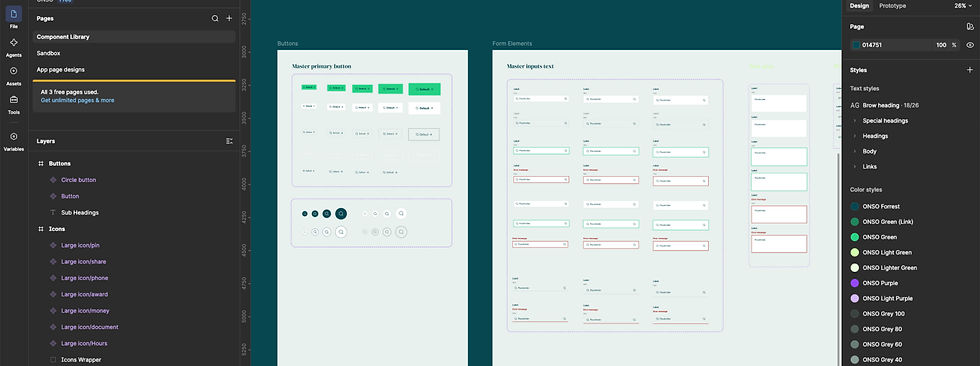
Instead of a static PDF, we build a fluid repository of digital design elements and reusable UI components.
We define the typography rules, button states, color variables, and spacing grids globally. Whether your team is building a new marketing landing page or updating a client dashboard, they pull from the exact same pre-engineered component vault that works across all screen types and sizes.
This approach shifts your brand from a set of restrictive rules into a scalable ecosystem. The benefits are felt immediately across your entire business:
Absolute visual continuity: The experience stays flawless whether a user is viewing your platform on a desktop monitor, a tablet, or an enterprise mobile application.
Drastically reduced development time: Your engineering team doesn't have to code a new layout from scratch every time marketing wants a page change. They simply assemble pre-approved, high-performance blocks.
Flawless conversion paths: By locking down button hierarchies and navigation frameworks, you remove the user friction that quietly leaks leads from your conversion pipelines.
Unifying market positioning and engineering
A premium digital presence requires complete harmony between your brand positioning and your digital interfaces. When a design system is executed correctly, it acts as a perfect translation layer between your business logic and your code.
This continuity is vital if you want your aesthetic to match your premium pricing. By executing our integrated User Experience (UX) and UI Design framework, we ensure that the strategic visual authority established during the branding phase is encoded directly into your digital product wrappers and user flows. It eliminates the traditional disconnect between creative strategy and development, resulting in a lightweight, robust platform built for long-term scale.
We utilised this exact design-system-first methodology when partnering with our clients. By moving away from fragmented, static visual assets and engineering a centralized, digital UI component library, we transformed their digital interfaces into cohesive, high-performance engines capable of supporting complex user journeys while protecting their brand integrity. Explore how we align design systems with technical execution across our full archive of Case Studies and Client Success Stories.
The bottom line
Your corporate identity is the structural blueprint for your company’s market authority. If you attempt to govern a modern digital ecosystem with an obsolete, static print book, you introduce continuous friction into your sales pipelines and development cycles.
By converting your visual identity into a fluid digital design system, you don't just upgrade your look. You remove operational bottlenecks, bulletproof your technical engineering, and position your platform to confidently challenge global industry competitors.
Ready to break through your visual ceiling?
If your current visual assets are struggling to support your enterprise pricing, or your digital ecosystem feels fragmented across your marketingbannerand product layers, your brand structure is a bottleneck to growth.
Do not allow a legacy digital footprint to compromise your pipeline or dilute your market equity.
Ready to build a highly scalable, screen-first digital identity? Get in touch with the MadeByMore team today to arrange a consultative audit of your current digital ecosystem and plan your next strategic breakthrough.


Comments